By Chelsea Blyth
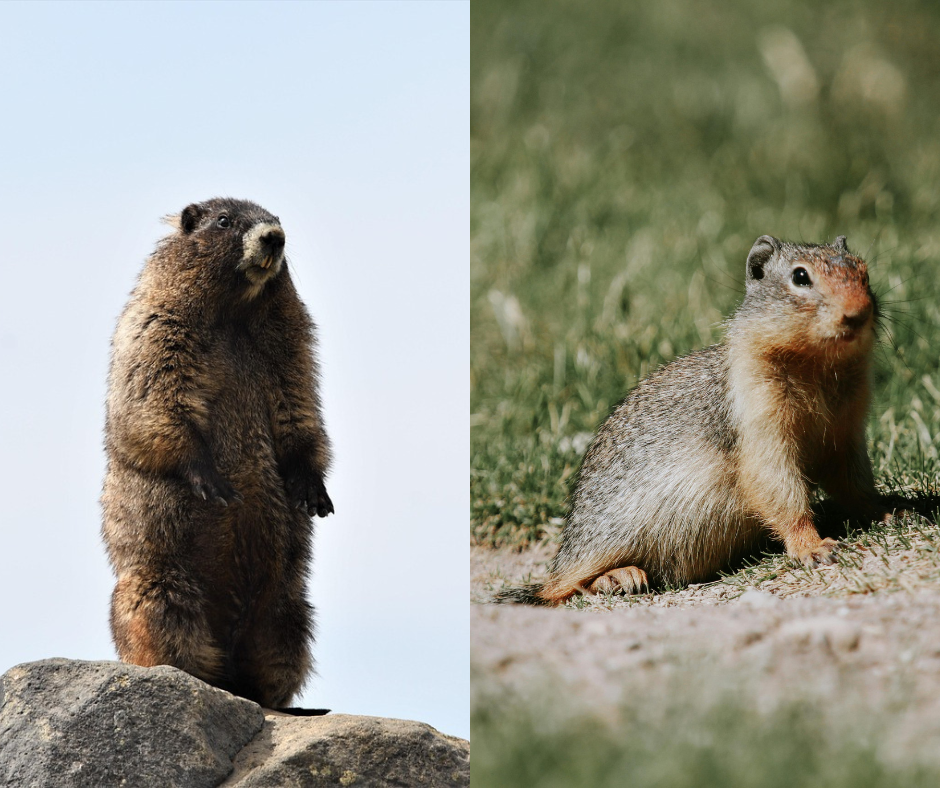
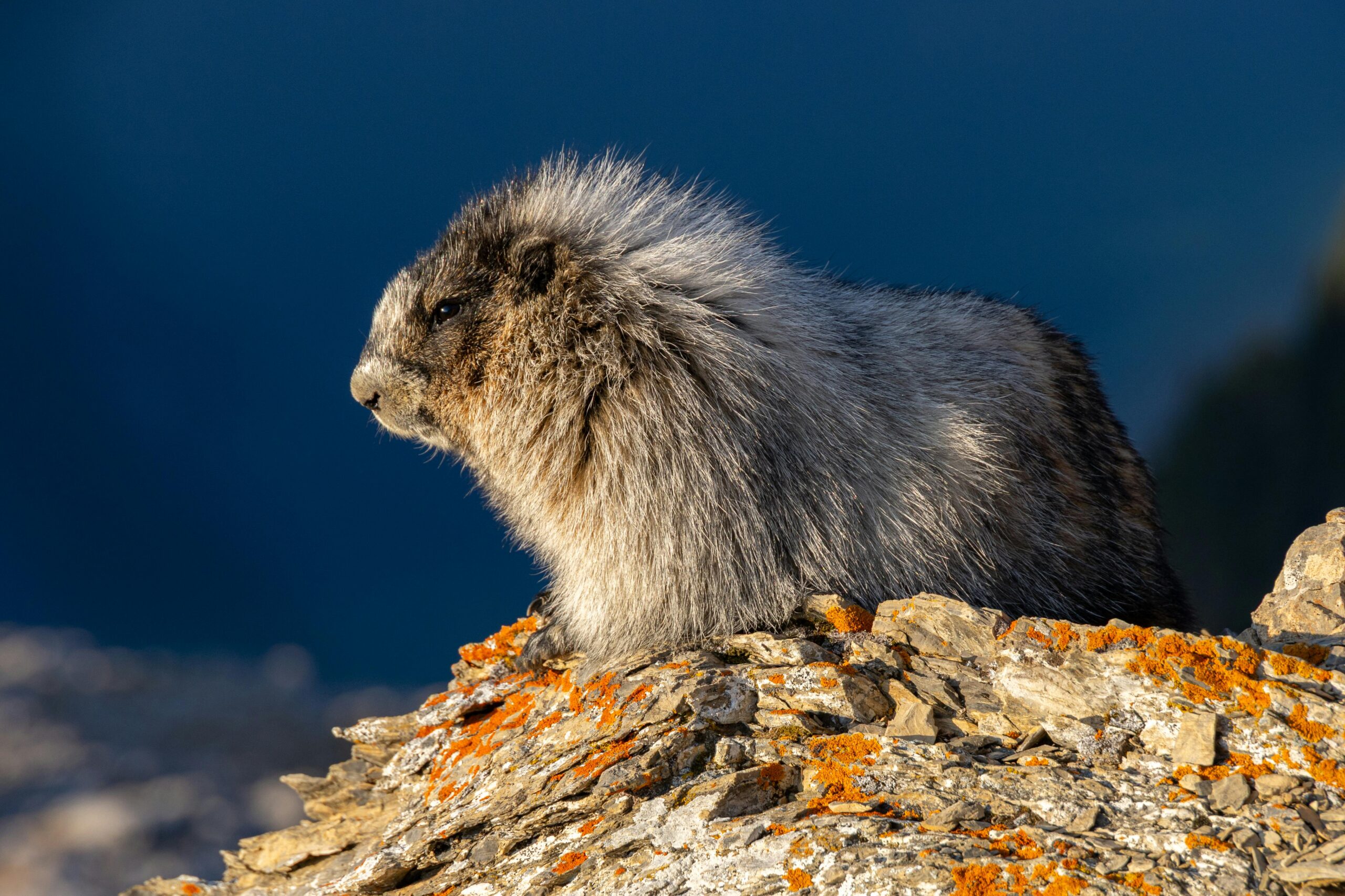
Marmots are a familiar part of Alberta’s mountain story. These chunky rodents, best known by the hoary marmot and their rock-dwelling cousins, occupy talus slopes, alpine meadows and rocky outcrops where grasses, forbs and lichens are plentiful. Their presence is easy to spot: sunning themselves on boulders, issuing high-pitched warning whistles and vanishing into burrow systems when danger approaches.1
Close Relatives in Alberta
The hoary marmot (Marmota caligata) and several ground squirrel species that are close relatives (for example, the Columbian ground squirrel, Urocitellus columbianus) are most often encountered in Alberta’s national parks and high country. Hoary marmots favour subalpine and alpine talus and boulder fields near the tree line; Columbian ground squirrels occur in alpine meadows, montane valleys and lower elevation grassy slopes. Both groups belong to the marmot/ground-squirrel tribe (Marmotini), which also contains prairie dogs and groundhogs.2
Behaviour
Nutrition
Habitat
Accidental Stowaways
A peculiar but genuine hazard is marmots becoming accidental stowaways in vehicles. Marmots sometimes shelter in wheel wells, engine compartments or beneath trailers, attracted by the warmth, mineral deposits (from road salts or anti-freeze), or simply seeking a sheltered crevice. Such incidents have been reported in North American mountain parks and occasionally result in long, unintended journeys for the animal. Drivers heading to or from alpine areas are advised to check under and around their vehicles, and to inspect the engine bay and wheel wells before driving off. These simple checks can prevent injury to the animal, avoid damage to the vehicle, and keep passengers safe.4

Human Interactions and Safety
Why Marmots Matter
As part of the ecosystem, marmots aerate soil with burrows, influence plant communities through selective grazing, and provide prey for raptors, carnivores and scavengers. Their seasonal rhythms and sensitivity to alpine conditions also make them useful indicators of environmental change. Protecting marmot habitat and practicing careful, wildlife-aware behaviour helps preserve both the animals and the mountain experience people seek.
References
- Alberta Biodiversity Monitoring Institute. 2023. Hoary Marmot (Marmota caligata). Retrieved from https://abmi.ca/species/marmota-caligata
- Parks Canada. 2022. Small mammals – Banff National Park. Retrieved from https://parks.canada.ca/pn-np/ab/banff/nature/faune-wildlife/mammal/smallmammals-petitsmammiferes Parks Canada
- Natural Habitat Adventures (Nathab). (n.d.). Hoary Marmot Facts | Canadian Rockies Wildlife Guide. Retrieved from https://www.nathab.com/know-before-you-go/alaska-northern-adventures/canadian-rockies/wildlife-guide/hoary-marmot/ Natural Habitat Adventures
- U.S. National Park Service. 2023. Marmots – Protecting Your Vehicle. Retrieved from https://www.nps.gov/seki/planyourvisit/marmots.htm