By Natalia Galan
Amphibians are often overlooked, but they are some of Alberta’s most vital, and most vulnerable, creatures. Our native toads are crucial to healthy ecosystems, but they face immense challenges, from harsh winters to environmental pollution. Understanding these tiny heroes is the first step in ensuring they survive and thrive.
Meet Alberta's Toads
Alberta is home to four main species often referred to as “toads.” It’s important to know the difference between them, as their unique adaptations affect their survival in different environments.
.jpg)
Three species are “True Toads” (Family Bufonidae):
- The boreal or western toad (Anaxyrus boreas): Widespread across Alberta’s forests and prairies.1
- The Canadian toad (Anaxyrus hemiophrys): Classified as ‘May Be At Risk’. 2
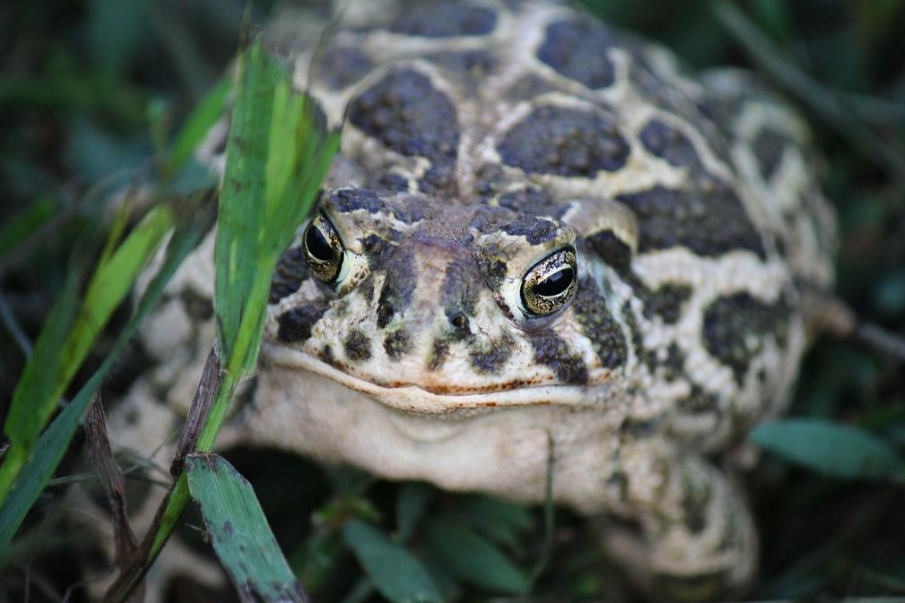
- The great plains toad (Anaxyrus cognatus): The only amphibian in Alberta to show improving status in recent years. 2
The fourth species is a special case: the plains spadefoot toad (Spea bombifrons): Though toad-like, this species belongs to a different family (Pelobatidae). Their name comes from the specialized, large “spades” on their hind feet, which they use for powerful burrowing.3
The urgency for conservation is clear: among all vertebrate groups monitored in Alberta, amphibians have the largest proportion of species—30%—ranked as ‘at risk’ or ‘may be at risk’. 2 Their highly permeable skin and reliance on both aquatic and terrestrial habitats make them extremely sensitive to environmental changes.1
The conservation status across species varies:
- Boreal/western toad and great plains toad are ranked Sensitive.2
- Canadian toad and plains spadefoot toad are ranked May Be At Risk. The Canadian toad also suffers from a ‘Data Deficient’ status, meaning we urgently need more information to protect them. 2
_(14033958964).jpg)
Why Toads Are the Unsung Heroes of the Ecosystem
Toads aren’t just fascinating—they are the backbone of many local ecosystems, serving essential roles as specialized predators, crucial prey, and even tiny engineers.
Natural Pest Control
Toads are highly efficient insectivores. They consume massive amounts of invertebrates, including ants, beetles, and moths.4 For farmers and gardeners, this means free, natural biological pest control, limiting populations of insects that may be potentially damage the environment if left unchecked.5 When toad populations decline, the ecological pressure of increased insect numbers can escalate the reliance on chemical pesticides, creating a dangerous feedback loop that can harm the environment.4
Food Web Connections
While adults are protected by noxious glandular secretions called bufotoxins, every other toad life stage is a food source.6 Eggs, tadpoles, and newly metamorphosed toadlets are eaten by a wide array of aquatic and semi-aquatic predators.7 Specialized predators, like hognose snakes, have evolved to safely consume adult toads.6 By supporting these predator populations, toads are vital for the functional stability of the local food web.
Pint-Sized Ecosystem Engineers
The prairie-dwelling toads—especially the great plains and plains spadefoot toads—are expert diggers. The plains spadefoot can burrow nearly a meter (three feet) deep in sandy soil.9 This persistent digging is essential, as it enhances soil aeration, aids water infiltration in dry environments, and creates stable subterranean microclimates. This behavior helps maintain soil health and hydrological function in the arid prairie biomes.10
Toads as Environmental Alarm Bells
The sensitive physiology of toads make them invaluable bioindicators — early warning systems for ecological trouble. Having highly permeable skin, which they use to breathe and exchange vital salts (like sodium and potassium), means they rapidly absorb contaminants from the ground or water. 11, 12
Threats: Pollution and Disease
The greatest threat facing toads today is the synergistic effect of pollution and infectious disease. The fungal pathogen Batrachochytrium dendrobatidis (Bd), which causes the deadly disease Chytridiomycosis, is a global killer.11

Bd attacks the toad’s skin, disrupting their ability to absorb necessary electrolytes. This electrolyte imbalance causes cardiac arrest, which in turn leads to a toad’s death.3 What makes this worse is the influence of human-caused pollution. Research suggests that common agricultural chemicals, such as the herbicides Atrazine and Carbaryl, may weaken a toad’s natural skin microorganisms. By disrupting these defenses, toads become significantly more vulnerable to fatal infection.11
This means we cannot treat disease outbreaks in toads in isolation; we must simultaneously address the underlying environmental stressors causing pollution and runoff to protect these vulnerable animals.
The Deep Sleep: Where Do Alberta Toads Go in the Winter?
The Boreal Toad’s Communal Strategy
Boreal toads usually avoid hibernating in the water.13 Instead, they rely on pre-existing terrestrial structures to stay warm and moist. They often seek out:
- Burrows dug by mammals, such as the golden-mantled ground squirrel.12
- The underside of banks above spring seeps.
- The base of large trees.12
These toads often hibernate communally at depths reaching up to 1.3 meters (over 4 feet) underground.12 This communal behavior highlights that suitable, frost-free locations are a scarce resource, making these deep hibernation sites critically important conservation features.13
Prairie Species: Specialized Diggers
The prairie species, like the great plains toad, are obligate self-excavators—they dig their own deep retreats. They spend the majority of their lives underground, only emerging during the warm season (April to September) to breed and feed.9
The plains spadefoot toad is uniquely adapted for this task, using their keratinized “spades” to dig vertically into loose, sandy soils.1 Adults will burrow down approximately three feet (around 0.9 meters) to escape freezing temperatures.4 Plains spadefoot toads are incredibly tough; they can survive losing up to 50% of their total body water content, which is far greater than most other toads.5 This superior tolerance allows them to survive the deep, dry conditions of the prairie soil during a long winter.4
Conclusion
In short, toads are an irreplaceable part of Alberta’s natural heritage. They are biological indicators of health and essential members of the food web, yet they are among our most threatened vertebrates. Protecting them means protecting their scarce, deep winter homes and ensuring clean water and soil in their habitats and across their migratory routes.1
References
- Status of Amphibians – Wetland Atlas of Alberta, accessed September 29, 2025, https://wetland-report.abmi.ca/atlas-home/4.0-Wetland-Biodiversity/4.2-Status-of-Amphibians.html
- Fish and wildlife indicators – Vertebrate species – Amphibians | Alberta.ca, accessed September 29, 2025, https://www.alberta.ca/fish-and-wildlife-indicators-vertebrate-species-amphibians
- Alberta – My Site – NatureWatch, accessed September 29, 2025, https://www.naturewatch.ca/frogwatch/alberta/?lang=en
- Wyoming Game and Fish Department. (2025). Western toad (boreal toad),accessed September 29, 2025, [https://wgfd.wyo.gov/media/7626/download?inline#:~:text=Western (boreal) Toads feed primarily,rowed strings in shallow water.](https://wgfd.wyo.gov/media/7626/download?inline#:~:text=Western (boreal) Toads feed primarily,rowed strings in shallow water.)
- Plains Spadefoot | Missouri Department of Conservation, accessed September 29, 2025, https://mdc.mo.gov/discover-nature/field-guide/plains-spadefoot
- Canadian toad | Minnesota DNR, accessed September 29, 2025, https://www.dnr.state.mn.us/reptiles_amphibians/frogs_toads/toads/canadian.html
- Great Plains toad (Anaxyrus cognatus) COSEWIC Assessment and Status Report 2010, accessed September 29, 2025, https://www.canada.ca/en/environment-climate-change/services/species-risk-public-registry/cosewic-assessments-status-reports/great-plains-toad-2010.html
- COSEWIC Assessment and Status Report on the Western Toad Anaxyrus boreas – Species at risk public registry, accessed September 29, 2025, https://www.registrelep-sararegistry.gc.ca/virtual_sara/files/cosewic/sr_Western Toad _2013_e.pdf
- Great Plains toad (Anaxyrus cognatus) COSEWIC Assessment and Status Report 2010, accessed September 29, 2025, https://www.canada.ca/en/environment-climate-change/services/species-risk-public-registry/cosewic-assessments-status-reports/great-plains-toad-2010.html
- The Plains Spadefoot Toad: Singer, Burrower, and Essential Part of the Water Cycle, accessed September 29, 2025, https://www.montananaturalist.org/blog-post/plains-spadefoot-toad/
- CHYTRID FUNGUS AND AMPHIBIANS OF ALBERTA A Miistakis citizen science initiative Carol Maichle, Glynnis Mathieson, Justin Plet – Mount Royal University, accessed September 29, 2025, https://www.mtroyal.ca/AboutMountRoyal/TeachingLearning/CSLearning/_pdfs/adc_csl_stex2.pdf
- Western toad (Bufo boreas) COSEWIC assessment and status report: chapter 8 – Canada.ca, accessed September 29, 2025, https://www.canada.ca/en/environment-climate-change/services/species-risk-public-registry/cosewic-assessments-status-reports/western-toad/chapter-8.html
- HIBERNATION SITES OF WESTERN TOADS (ANAXYRUS BOREAS): CHARACTERIZATION AND MANAGEMENT IMPLICATIONS, accessed September 29, 2025,https://sccp.ca/sites/default/files/species-habitat/documents/hibernation sites of western toad_Browne_Paszkowski_2010.pdf