By Courtney Collins
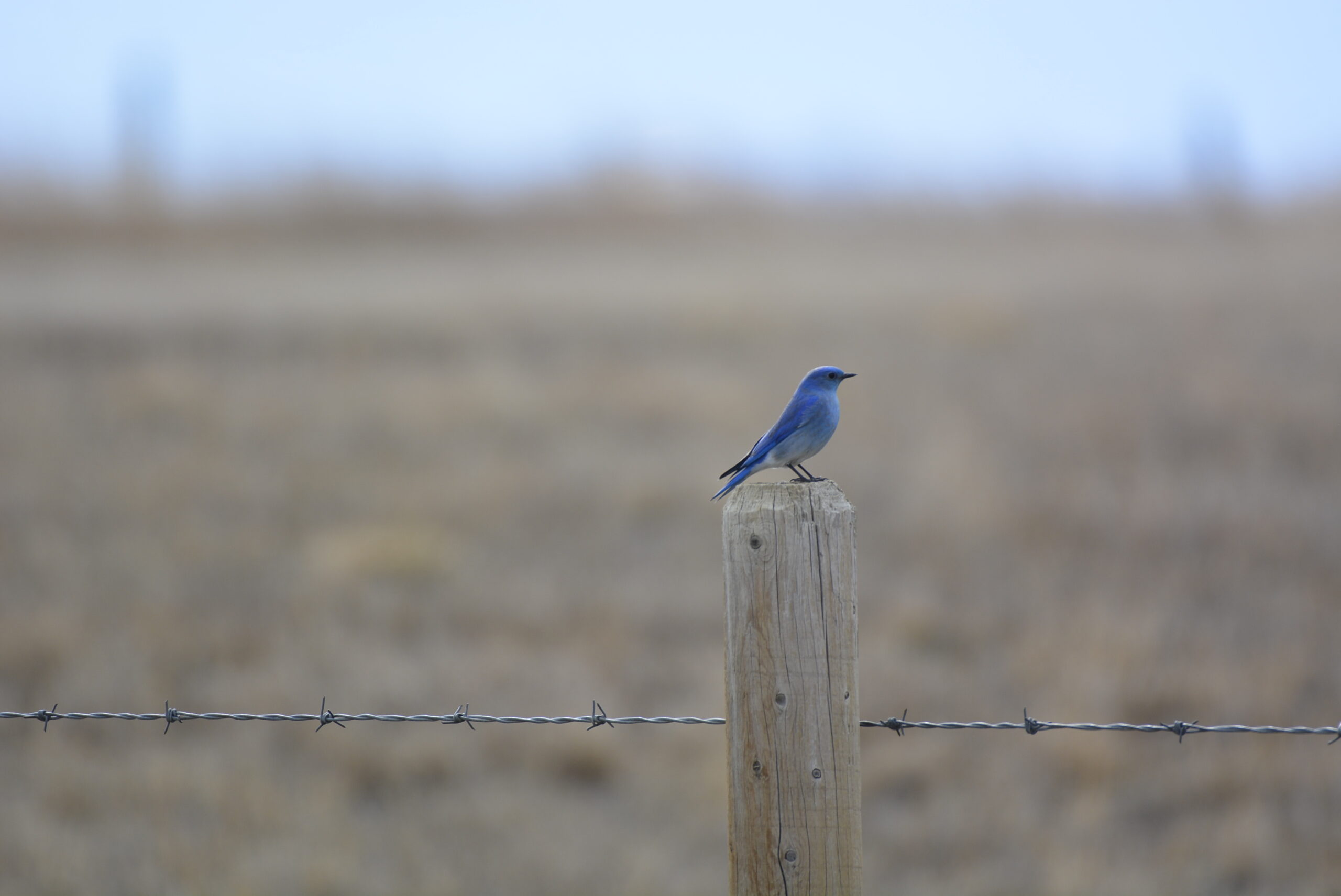
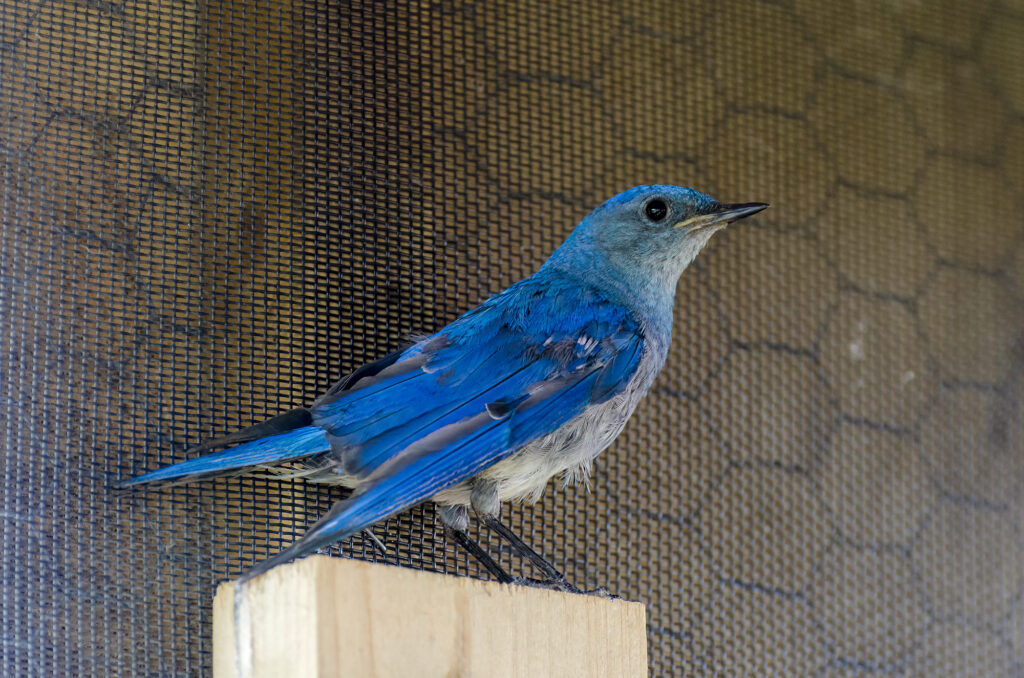
Mountain bluebirds, Sialia currucoides, have a brilliant blue colouration. The males are bright sky blue with a grey or white lower belly, while females are pale brownish-grey with light blue on their wing tips and tail feathers.1 These beautiful birds can be found across western Manitoba, much of Saskatchewan and Alberta, interior BC, and north into the Yukon. Their preferred habitat includes open grasslands (often choosing areas on the edges of prairies or tundra), farmland, and open forested areas. 2,3
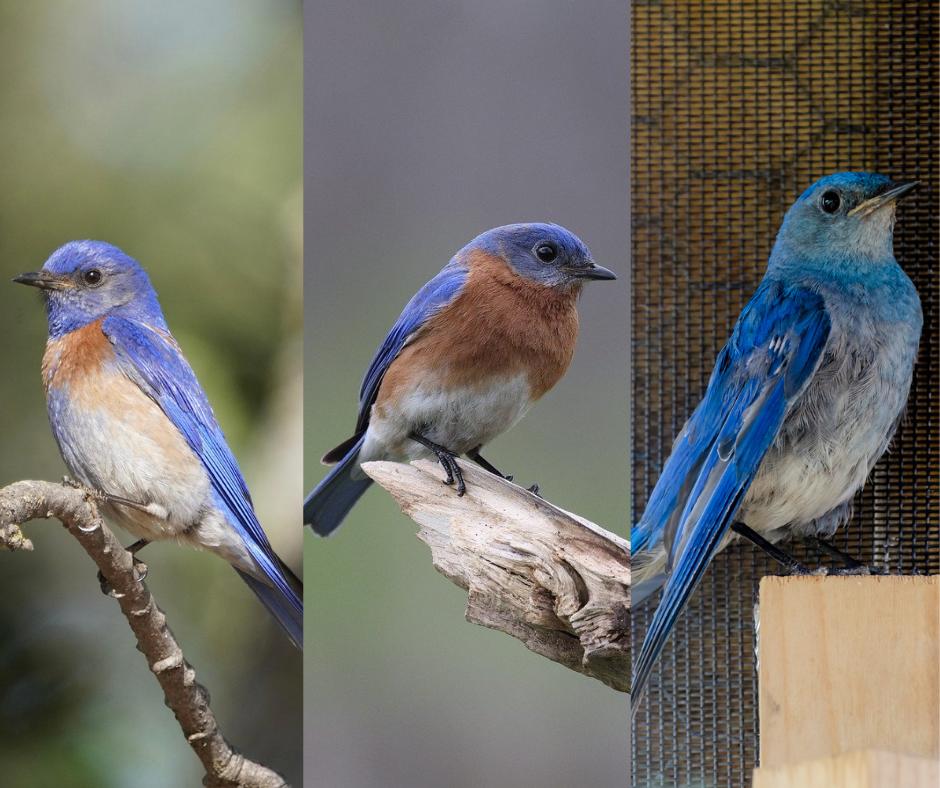
These birds are a migratory species in Canada, so be sure to keep an eye out for them during the spring and summer months. During the colder months, mountain bluebirds migrate to the southern United States and northern Mexico. 3 In some areas, mountain bluebirds overlap in range with either western or eastern bluebirds or both, though mountain bluebirds can and will nest at higher elevations than either of the other bluebird species.4,5 While the eastern and western bluebirds both have reddish colouration on their chests, the mountain bluebird does not, making them easily distinguishable from their closely related counterparts.6
While other bird species assess their mates through fitness or other physical attributes, female mountain bluebirds instead assess potential mates based on a male’s nesting location, which he advertises during the mating season.2 Mountain bluebirds nest in pre-existing cavities or nest boxes, as they are unable to create nesting cavities themselves. 6
The diet of mountain bluebirds includes fruits, seeds and insects, the latter of which is their preferred food source, particularly while breeding. Though these birds primarily eat beetles, grasshoppers, and caterpillars, they can also catch flying insects mid-air. This hunting strategy is only used if absolutely necessary as it requires more energy than other methods. More often, they hunt by launching downwards from a perch directly towards a target on the ground or low bush. Mountain bluebirds will also eat currants, elderberries, grapes and juniper berries, among other available fruits and seeds.4
Conservation
While the IUCN (International Union for Conservation of Nature) lists mountain bluebirds as ‘least concern’ globally, research shows the Canadian population of this species has suffered a 60% decrease since 1970.7,8 It’s important to understand the reasons behind population declines. For mountain bluebirds, habitat loss, decreased availability of food, and climate stress (including extreme weather) all play a part. In southern Alberta, an important breeding area for mountain bluebirds, native prairie ecosystems have been degraded or fragmented significantly, with only around 26% remaining in natural condition.8 Additionally, some research studies have also shown that anthropogenic (human-created) noise negatively impacts breeding mountain bluebirds, which in turn may negatively influence population trends for this species.9,10
This may all sound pretty disheartening… so what can we do to help their conservation?
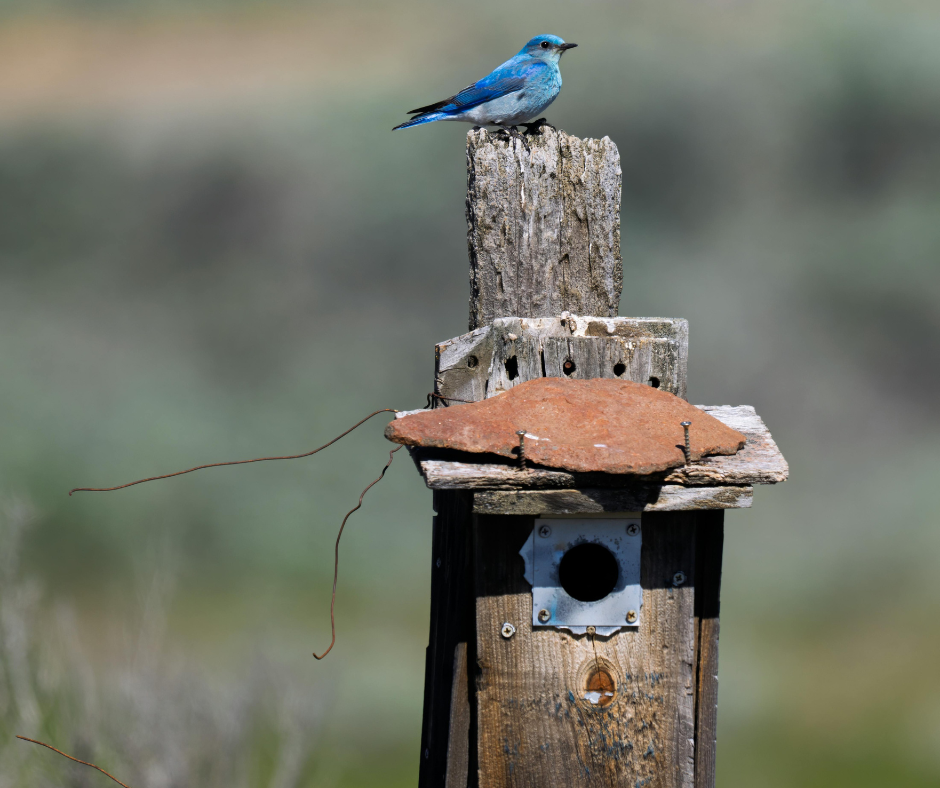
One of the best ways to help mountain bluebirds is by providing nesting areas. This species takes readily to nest boxes, placed appropriately for the species. Mountain Bluebird Trails Conservation Society (MBTCS) is a great resource for how to build and place nest boxes that are usable for these birds. This organization has done decades of mountain bluebird monitoring and research to identify specific nesting needs in for this species. Nest box building instructions can be found on their website, www.bluebirdtrails.org. If you already have a nest box, you can submit any data you’ve gathered to MBTCS or input information into eBird. Alternatively, you can become a trail monitor with MBTCS to help monitor nest boxes in more remote areas of southern Alberta.8,11
If you see a mountain bluebird in need of help, please contact AIWC or your nearest wildlife rescue.
References
- All About Birds, “Mountain Bluebird Identification”, Cornell Lab, 2025, https://www.allaboutbirds.org/guide/Mountain_Bluebird/id
- Nature Conservancy Canada, “Mountain bluebird”, 2025, https://www.natureconservancy.ca/en/what-we-do/resource-centre/featured-species/birds/mountain-bluebird.html
- All About Birds, “Mountain Bluebird Overview”, Cornell Lab, 2025, https://www.allaboutbirds.org/guide/Mountain_Bluebird/overview
- All About Birds, “Mountain Bluebird Life History”, Cornell Lab, 2025, https://www.allaboutbirds.org/guide/Mountain_Bluebird/lifehistory
- Ellis Nature Centre, “Mountain Bluebird”, 2025, https://ellisnaturecentre.ca/mountain-bluebird/
- Wikipedia, “Mountain bluebird”, Last modified August 30, 2025, https://en.wikipedia.org/wiki/Mountain_bluebird
- IUCN, “Mountain Bluebird”, 2025, https://www.iucnredlist.org/fr/species/22708556/137560639
- Mountain Bluebird Trails Conservation Society, “Are Mountain Bluebird populations declining?”, August 31, 2025, https://bluebirdtrails.org/news/are-mountain-bluebird-populations-declining-2025
- Kleist, Nathan J. et al. 2016. “Sound settlement: noise surpasses land cover in explaining breeding habitat selection of secondary cavity-nesting birds.” Ecological Applications 27, no. 1 (January 2017): 260-273. https://doi.org/10.1002/eap.1437
- Kleist, Natham J. et al. 2018. “Chronic anthropogenic noise disrupts glucocorticoid signaling and has multiple effects on fitness in an avian community.” PNAS 115, no. 4 (January): E648-E657. https://doi.org/10.1073/pnas.1709200115
Mountain Bluebird Trails Conservation Society, “Current Opportunities”, March 15, 2025, https://bluebirdtrails.org/opportunities