By Katie Grant
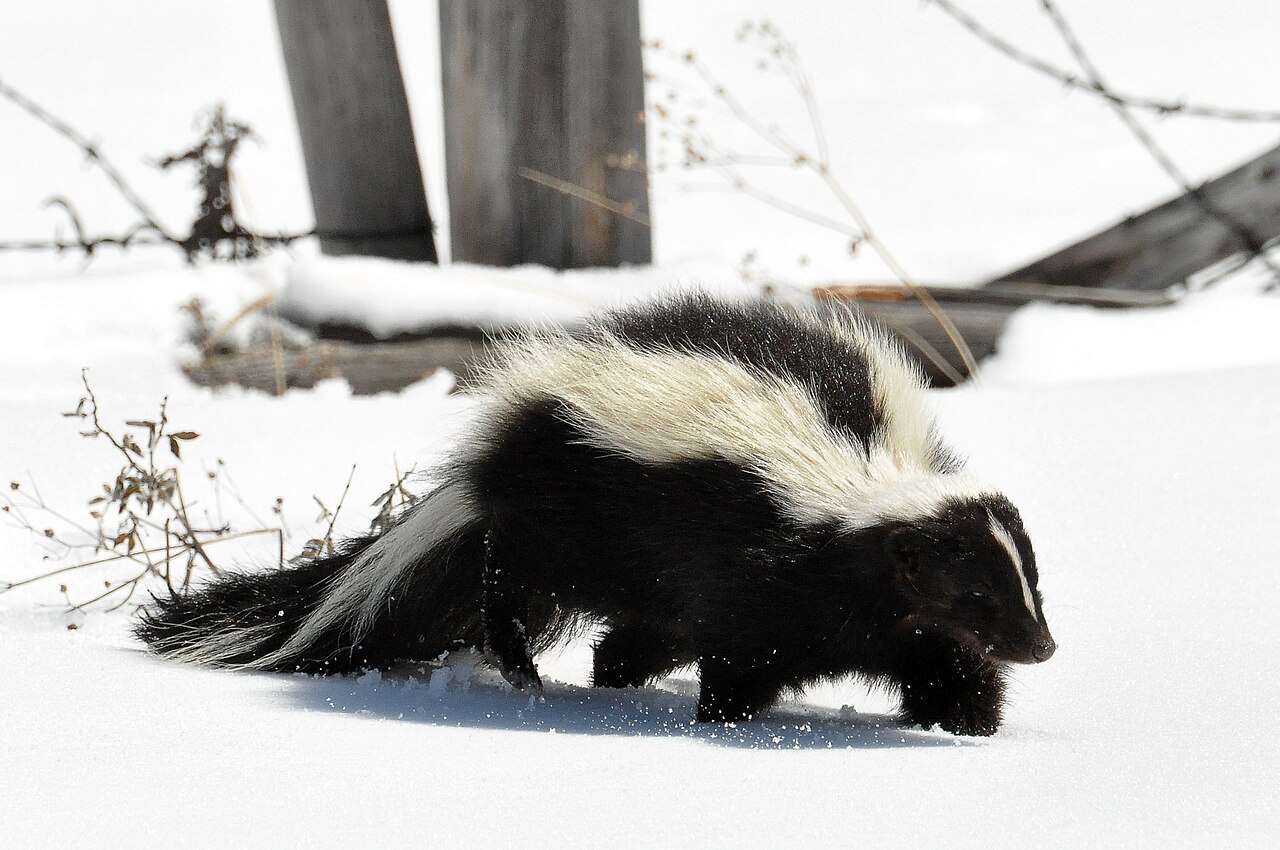
As the snow thaws and March days grow longer, the striped skunk begins stirring more often near farms, grasslands, and even urban backyards. Often misunderstood because of its pungent defence, the striped skunk is a fascinating and ecologically important animal.
The striped skunk is a stout, medium-sized mammal about the size of a house cat, with glossy black fur and distinctive white stripes that run from its face down along its back and tail. Adults typically measure between 50.8 and 76.2 centimeters in length and weigh between 1.8 and 4.5 kilograms. Skunks have highly developed scent glands that they use to defend themselves from predators; however, they prefer to retreat rather than spray.1
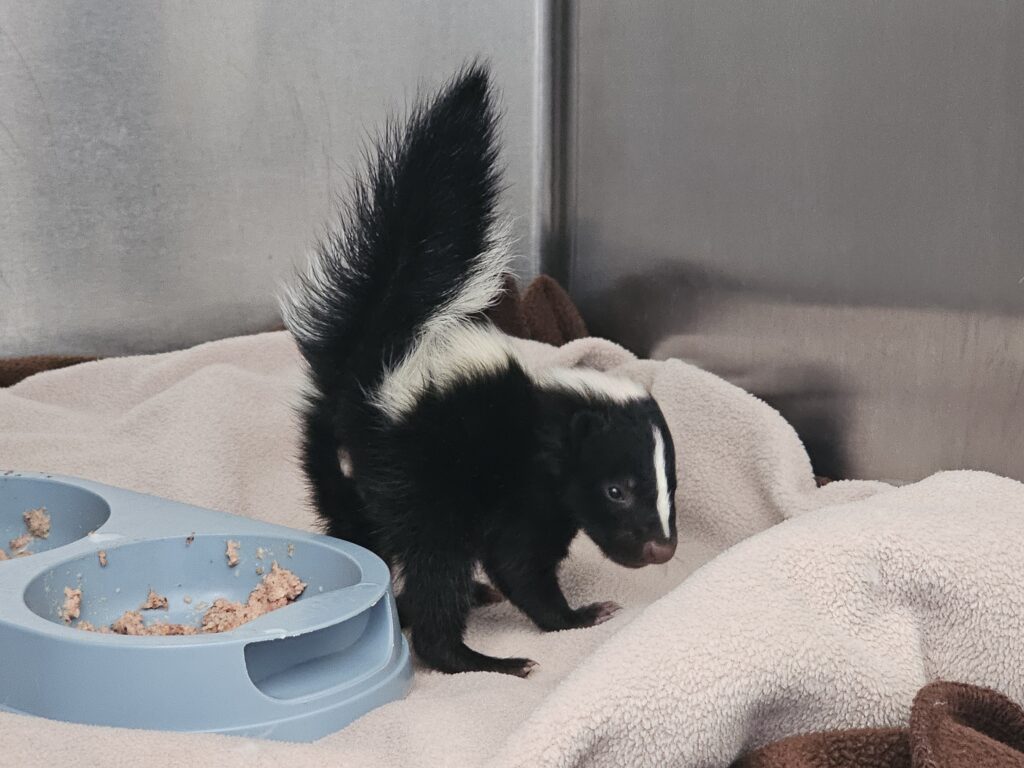
Striped skunks are widespread across Alberta, thriving in various habitats including mixed forests, grasslands, agricultural areas, brushy edges, and even around buildings and rural yards. They are comfortable around humans and often take advantage of food sources and shelter that human-altered landscapes provide. Skunks usually occupy abandoned burrows made by other animals such as woodchucks or foxes. They also den under decks, stumps, rock piles, and sometimes even under homes.
Striped skunks are omnivores with a varied diet, consuming insects, grubs, mice, shrews, young rabbits, bird eggs, and plant matter. Skunks play a beneficial role in controlling pest populations in Alberta ecosystems. In autumn and winter months, their diet is roughly balanced between animal and plant foods, but in warmer months, insects, especially grasshoppers, make up a large portion of their intake.2
Skunks are primarily nocturnal and leave their dens in the late afternoon or evening to forage. Unlike true hibernators, striped skunks do not fully sleep through winter. Instead, they enter a state known as torpor, during which their metabolism slows down, and they remain in their dens during extreme cold.
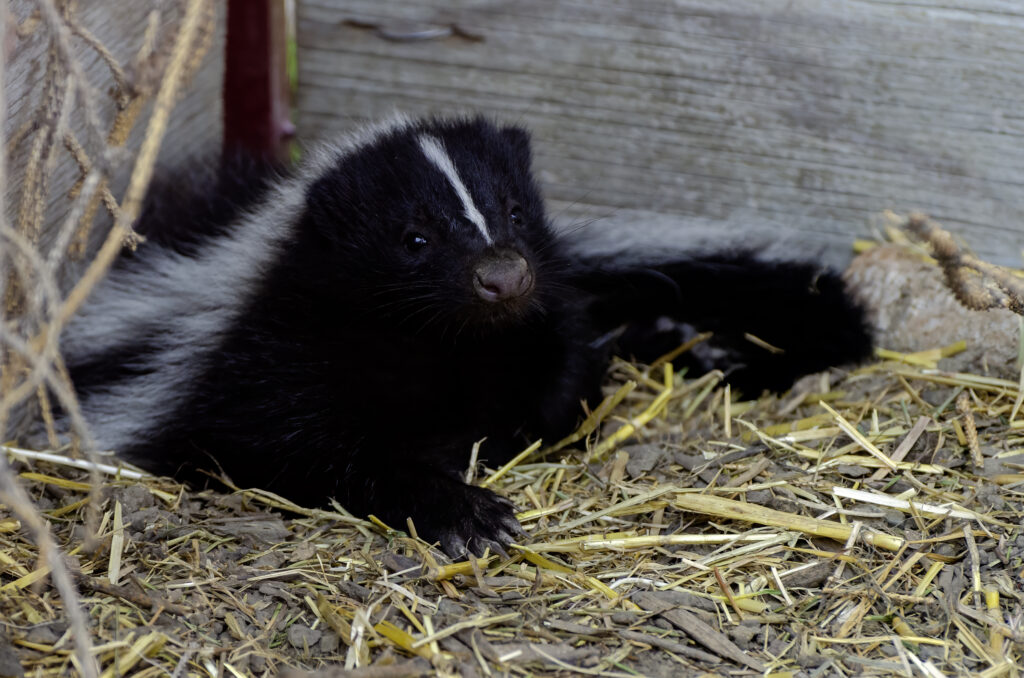
By late February to late March, skunks begin to emerge more regularly as the weather warms, marking the start of their mating season. After breeding in early spring, females give birth in May or early June to a litter typically consisting of four to six young. Kits are born tiny and vulnerable but grow rapidly. Their eyes open in just a few weeks, and they are weaned by around two months of age.
The striped skunk’s most infamous feature is its ability to spray a strong, oily musk from glands near its tail as a last-resort defence. The scent can travel several metres and can be very difficult to remove if you or a pet is sprayed. Despite their reputation, skunks are not aggressive animals and will often give warning signals such as growling, hissing, foot-stomping, and tail raising before resorting to spraying.1
Striped skunks may become nuisance animals if they take up residence under buildings or forage in yards. To avoid this, remove food attractants such as accessible garbage or pet food left outside and seal gaps under structures to prevent denning.
The striped skunk is often overlooked because of its smell, but its ecological role as a predator of insects and small mammals is valuable in both wild and agricultural landscapes. Skunk mothers often leave kits alone for several hours while foraging. If you find a kit alone, observe from a distance for 12 to 24 hours. The kit likely needs help if a deceased adult skunk is found nearby, the den has been destroyed, or it has visible injuries.3
If you find a kit or adult skunk with visible injuries, please contact AIWC for assistance. Never try to raise a skunk yourself. Improper care can cause serious health issues and make future release difficult or impossible.