By Natalia Galan
It’s All in the Details: Adult Identification
When you see a deer, the first thing you should check is its “accessories”—the ears, the tail, and the face.
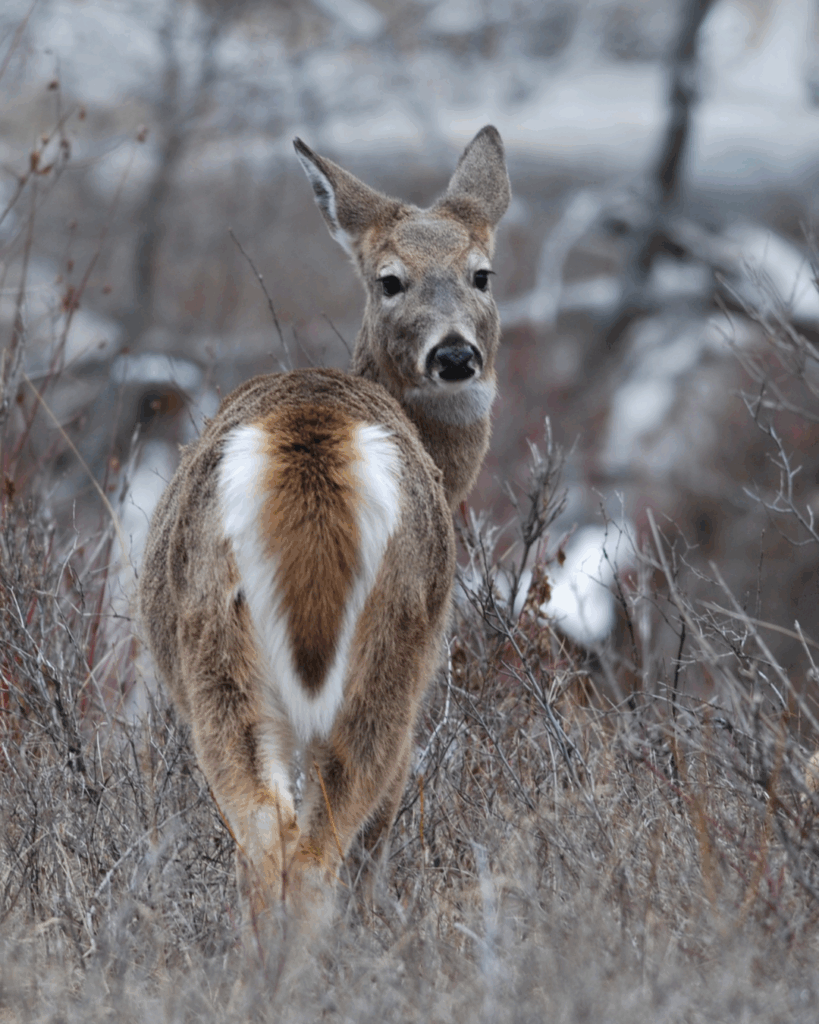
- White-tailed Deer: They have a wide, bushy tail that is brown on top. When they get scared, they lift it up like a white flag to warn others. This is called “flagging.”1
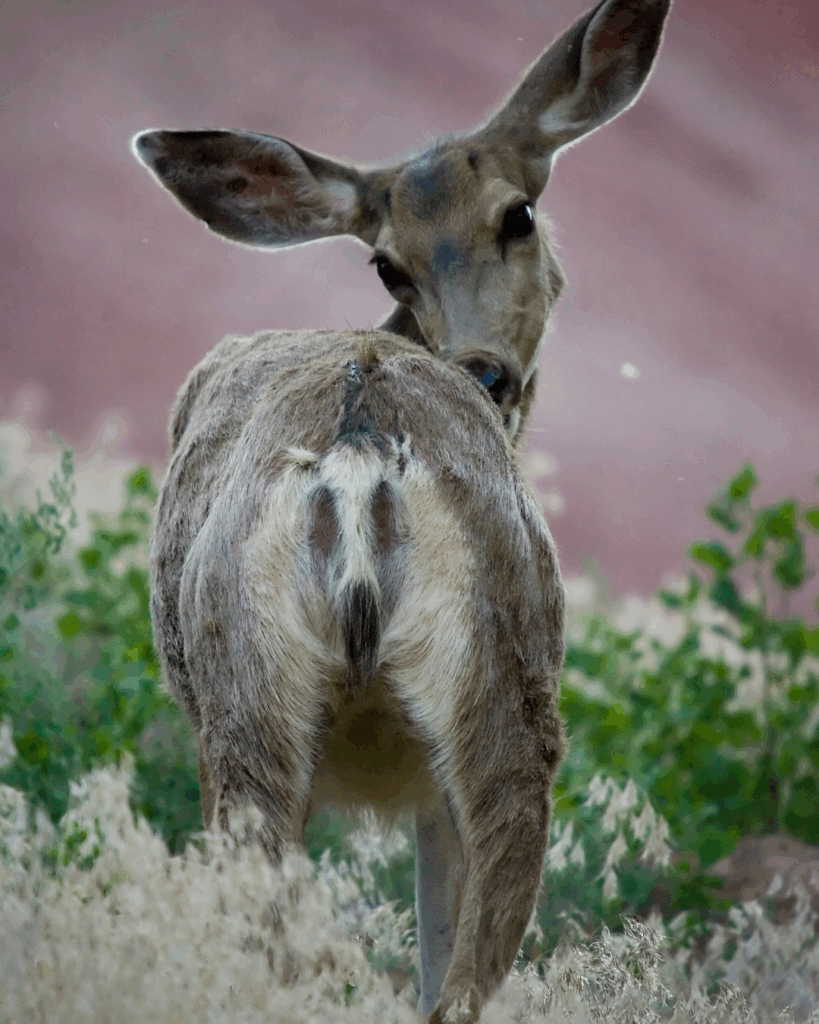
- Mule Deer: They have a smaller, thin tail that looks like a rope with a black tip.1 They also have a large, bright white patch on their rump that stays visible even when their tail is down.1
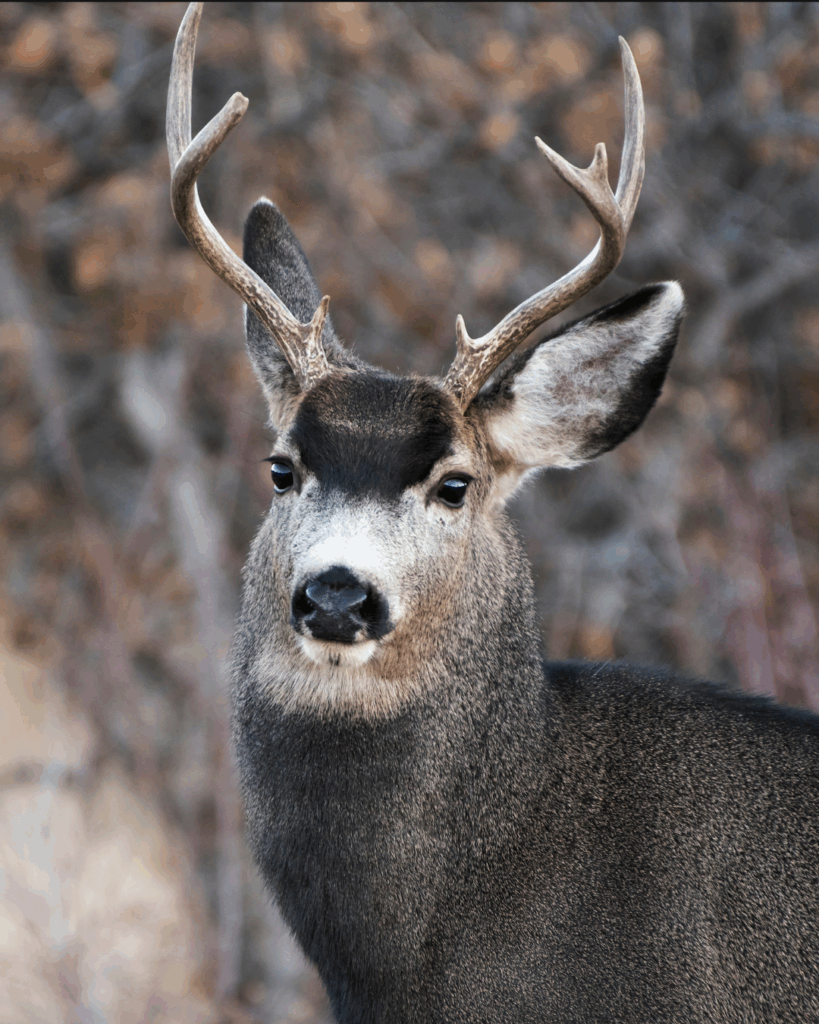
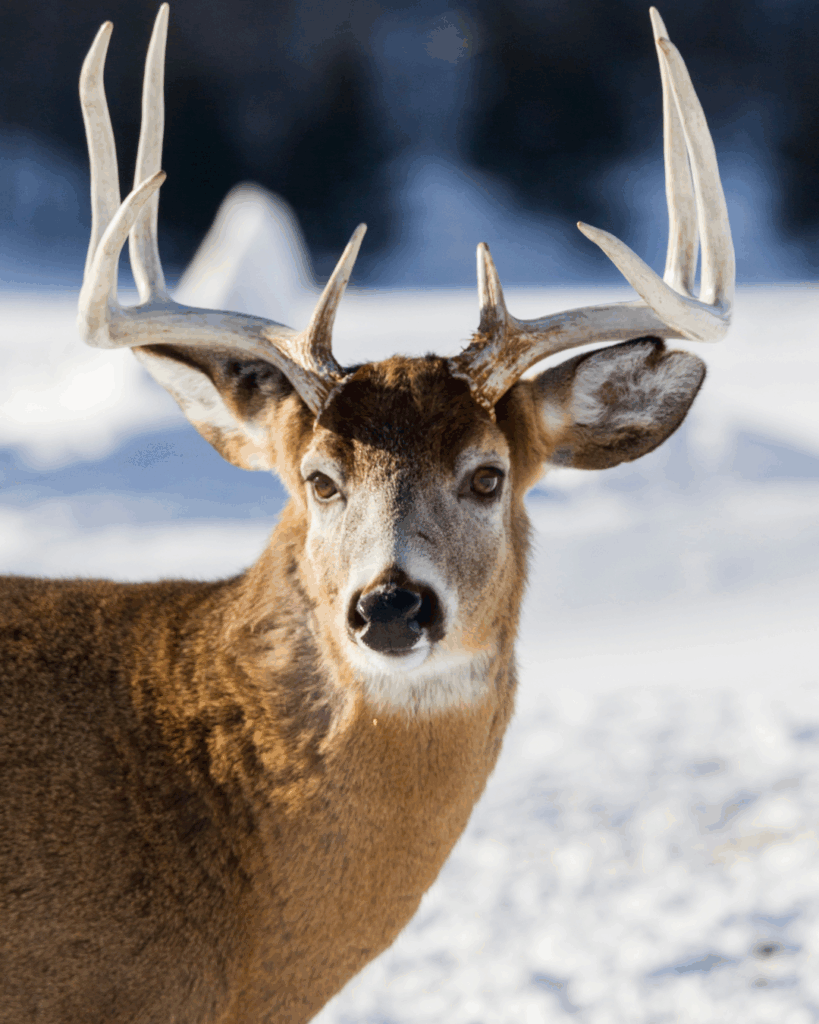
- Whitetail: All the points grow up from one main beam.1
- Mule Deer: The antlers fork into a “Y” shape, and then those forks split again.1
| Feature | Mule Deer | White-tailed Deer |
|---|---|---|
| Ears | Large (mule-like) | Small and rounded |
| Tail | Thin; rope-like with black tip | Wide; brown with white underside |
| Rump | White | Brown |
| Antlers | Points fork and fork again (Y-shape) | Tines grow from one main beam |
What About the Babies? Identifying Fawns
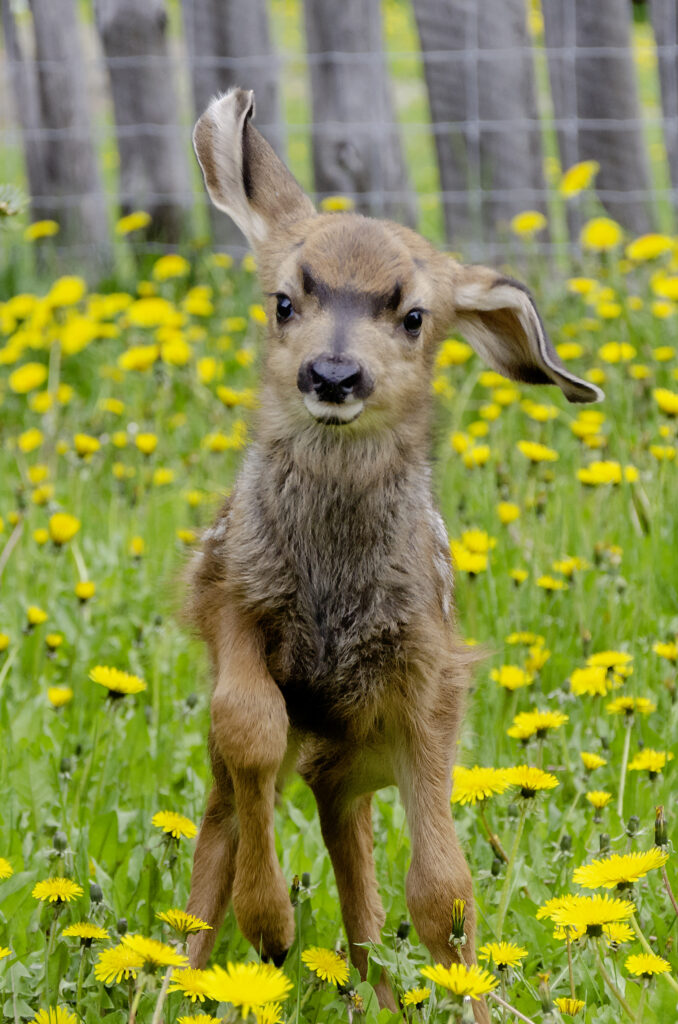
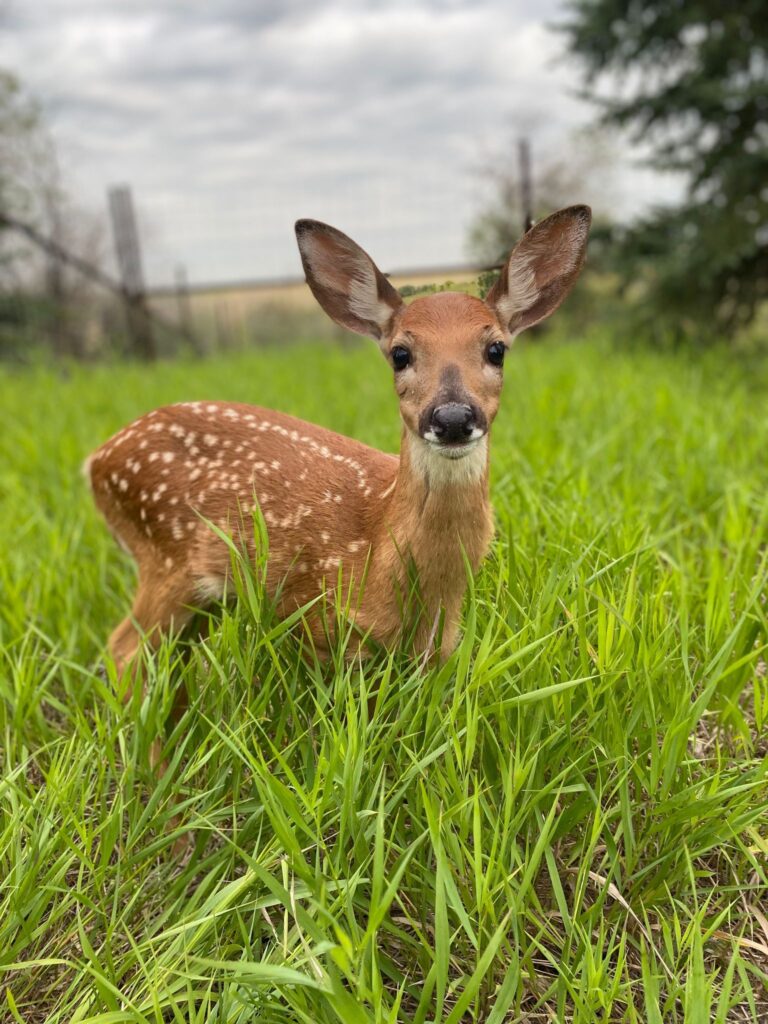
- Leg Glands: Look at the outside of the back leg. Both deer have a scent gland there called the metatarsal gland. In a whitetail, this gland is very small (about 1 inch) and surrounded by white hair.9 In a mule deer, it is much longer (4 to 6 inches) and surrounded by brown hair.9
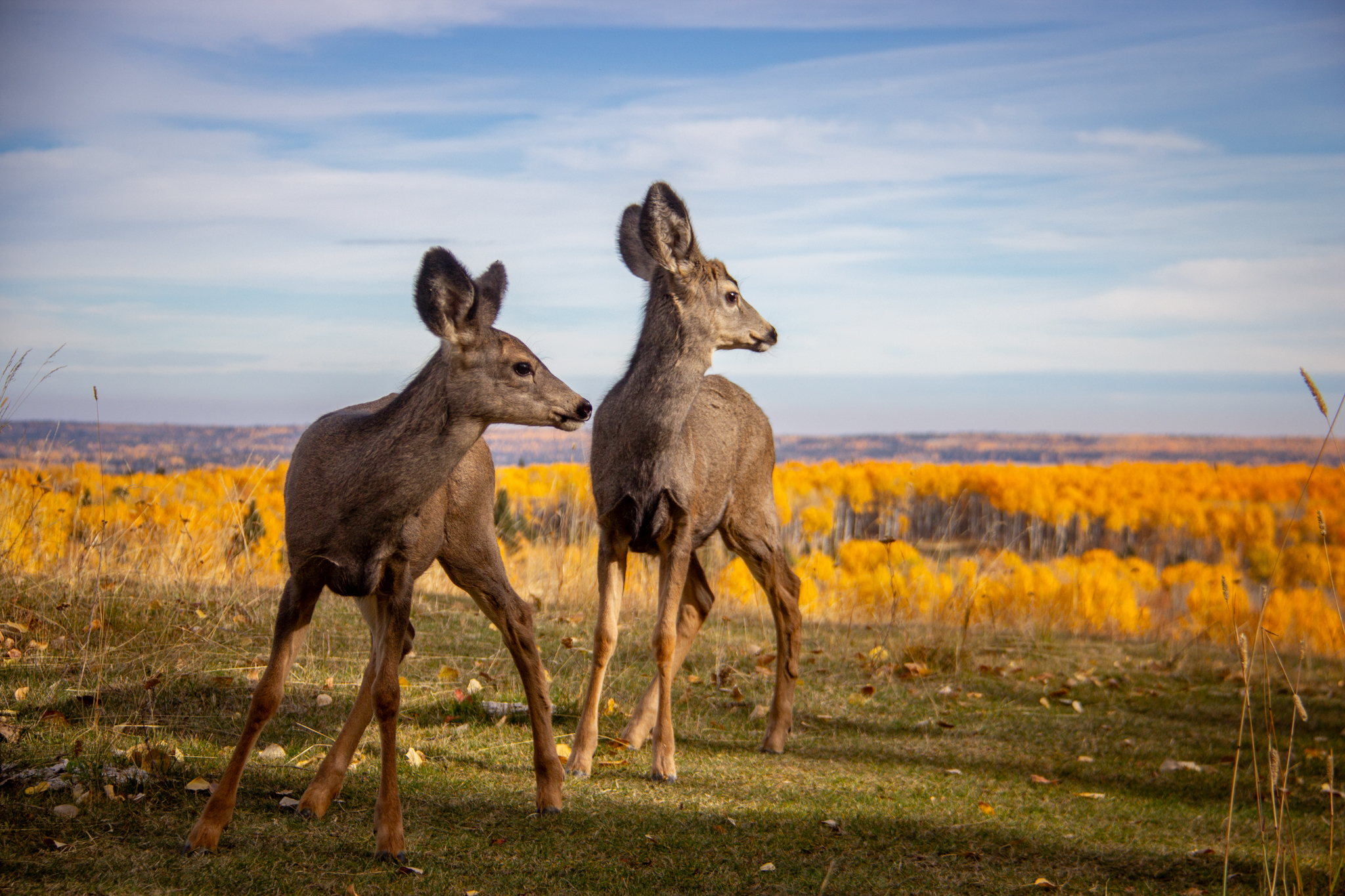
- Ear Size: Even as babies, mule deer fawns have ears that look too big for their heads compared to whitetail fawns.11
- The “Pogo Stick” Move: If a fawn gets spooked and starts to run, watch its legs. A whitetail will gallop like a horse. A mule deer will jump up and down on all four legs at once, like it’s on a pogo stick! This is called stotting.4
Where The Live
What They Eat
Both deer are “browsers,” meaning they prefer leaves, twigs, and shrubs over plain grass.17
- Whitetails: They are picky eaters. They use their pointed noses to find the tastiest buds, berries, and even garden flowers.19
Mule Deer: They can eat tougher, high-fiber plants. In the winter, they rely on things like sagebrush and Douglas-fir twigs.20
Protecting Alberta's Deer
Conservation in Alberta is a big job. Right now, there are two main challenges for our deer:
1. Chronic Wasting Disease
CWD is a serious, fatal illness that affects the brains of deer, elk, and moose.22 It first showed up in wild deer in Alberta in 2005 and has been spreading westward from Saskatchewan.22 Mule deer are catching it more often than whitetails.24 To help, the government asks hunters to submit the heads of deer they harvest for testing so scientists can track the disease.22
2. The Caribou Connection
In northern Alberta, the expansion of whitetails is causing trouble for woodland caribou.25 Because whitetails are moving into caribou areas, they are bringing more predators like wolves with them. These wolves then end up hunting the caribou, which are already at risk.25
Conclusion
Whether you are hiking in the Rockies or just driving past a farm near Red Deer, keep an eye out for these amazing animals. Now that you know the difference between the rope-like tail of a muley and the white flag of a whitetail, you can appreciate the unique ways each species has adapted to survive in our beautiful province.
Works Cited
- MULE DEER WHITE-TAILED DEER – Rapid LMS, https://cdn.files.rapidlms.com/view/7c/32/a1/49/d9/0a/77/b3/e8/cb/bc/7d/e0/79/96/3d/original/AHEIA-Deer-Workbook.pdf
- Mule Deer vs. Whitetail Deer: How to Tell Them Apart | Outdoor Life, https://www.outdoorlife.com/conservation/mule-deer-vs-whitetails/
- Hunting Whitetail vs Mule Deer: How to Tell Them Apart – SITKA Gear, https://www.sitkagear.com/experience/whitetail-vs-mule-deer
- Mule Deer | National Wildlife Federation, https://www.nwf.org/Educational-Resources/Wildlife-Guide/Mammals/Mule-Deer
- Mule Deer vs Whitetail | Field & Stream – FieldandStream.com, https://fieldandstream.com/stories/hunting/deer-hunting/mule-deer-vs-whitetail
- Mule Deer vs. Whitetail Deer – Hunter Ed, https://www.hunter-ed.com/colorado/studyGuide/Mule-Deer-vs.-Whitetail-Deer/20300601_166204/
- A Quick Guide to Differentiate Mule Deer from White-tailed Deer – Colorado Outdoors Online, https://coloradooutdoorsmag.com/2015/03/18/a-quick-guide-to-differentiate-mule-deer-from-white-tailed-deer/
- Mule Deer vs. Whitetails: A Species Comparison | MeatEater Wired …, https://www.themeateater.com/wired-to-hunt/whitetail-management/whitetails-and-mulies-a-comparison
- Glands on a White-tailed Deer Leg – to know the land, https://www.toknowtheland.com/blog/glands-on-a-white-tailed-deer-leg
- Identifying Types of Deer – Bowhunter Ed, https://www.bowhunter-ed.com/national/studyGuide/Identifying-Types-of-Deer/301099_185364/
- Estimating Ungulate and Predator Population Densities in Chinchaga and Caribou Mountains – ABMI.ca, https://ftp-public.abmi.ca/home/publications/documents/663_Dickie_etal_2025_NWSARFinalReport_ABMI.pdf
- White-tailed Deer — Edmonton & Area Land Trust, https://www.ealt.ca/blog/deer
- ABMI Odocoileus hemionus Mule Deer, https://abmi.ca/species/odocoileus-hemionus
- Deer family – Jasper National Park – Parks Canada – Canada.ca, https://parks.canada.ca/pn-np/ab/jasper/nature/faune-wildlife/cervides-deer
- Country deer, city deer – why are mule deer seen more in Alberta’s towns?, https://www.stalbertgazette.com/beyond-local/country-deer-city-deer-why-are-mule-deer-seen-more-in-albertas-towns-8599383
- Make Sure to Provide Enough Browse for Your Deer – North American Whitetail, https://www.northamericanwhitetail.com/editorial/providing-enough-browse-for-deer/523301
- Mule Deer Habitat – USDA Forest Service, https://www.fs.usda.gov/biology/resources/pubs/wildlife/cpe_muledeer_hab_guidelines.pdf
- What Do Deer Eat? Almost Anything, But These 80+ Foods Are Their Favorites, https://www.outdoorlife.com/conservation/what-do-deer-eat/
- What Do Deer Eat? Expert Analysis by Region – North American Whitetail, https://www.northamericanwhitetail.com/editorial/whitetail-101-what-do-deer-eat/262416
- MULE DEER Scientific Name: Odocoileus hemionus hemionus Species Code: M-ODHH Status, https://a100.gov.bc.ca/pub/acat/documents/r1573/whr_4109_modhe_1097078581992_3f7c787cc7c9486aa185bdad7e4c4f53.pdf
- Chronic Wasting Disease | My Wild Alberta, https://mywildalberta.ca/hunting/safety-procedures/chronic-wasting-disease.aspx
- Brief history of chronic wasting disease (CWD) in Alberta – YouTube, https://www.youtube.com/watch?v=NiOg12cY1a8
- Additional Information – Alberta Guide to Hunting Regulations, https://albertaregulations.ca/huntingregs/additional-information.html
- White-tailed deer are on the rise in Alberta and BC. We’re learning what that means for caribou. – fRI Research, https://friresearch.ca/news/white-tailed-deer-are-on-the-rise-in-alberta-and-bc-were-learning-what-that-means-for-caribou
Why Do Deer Raise Their Tails When They Run?, https://deerassociation.com/why-do-deer-raise-their-tails-when-they-run/