by Zoe Joy
As children, we are taught about a human’s 5 basic senses: sight, hearing, taste, smell and touch. Our senses help aid us in communicating and navigating through the world. Similar to humans, animals are equipped with unique senses of their own. In addition to their basic senses, certain animal species have ‘super senses’. “Animals possess unique and enhanced senses that aid in survival, including vision, hearing, smell, touch, and taste. These abilities allow them to find food, avoid predators, and communicate effectively. Understanding these super senses not only informs wildlife conservation efforts, but also inspires advancements in human technology.”1 When researching this topic, it was exciting to learn there are multiple wildlife species right here in Alberta, that possess super senses of their own; animals like snakes, bats and owls have some of these traits, to name a few!
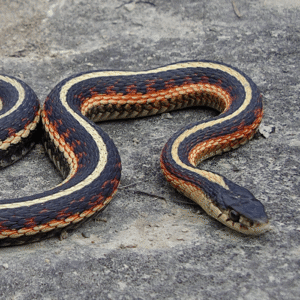
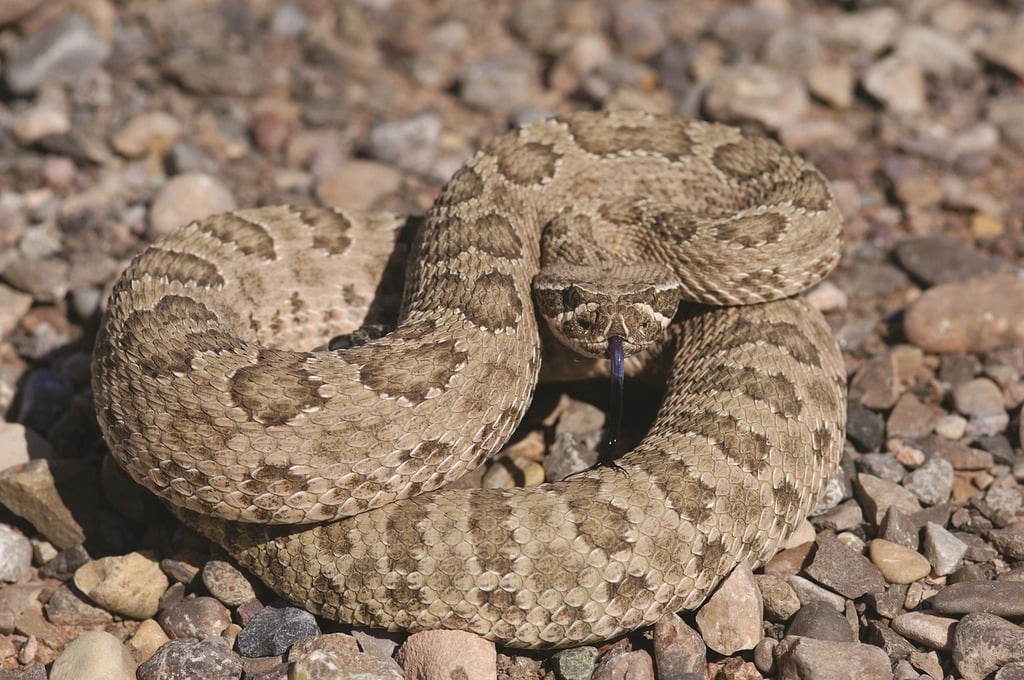
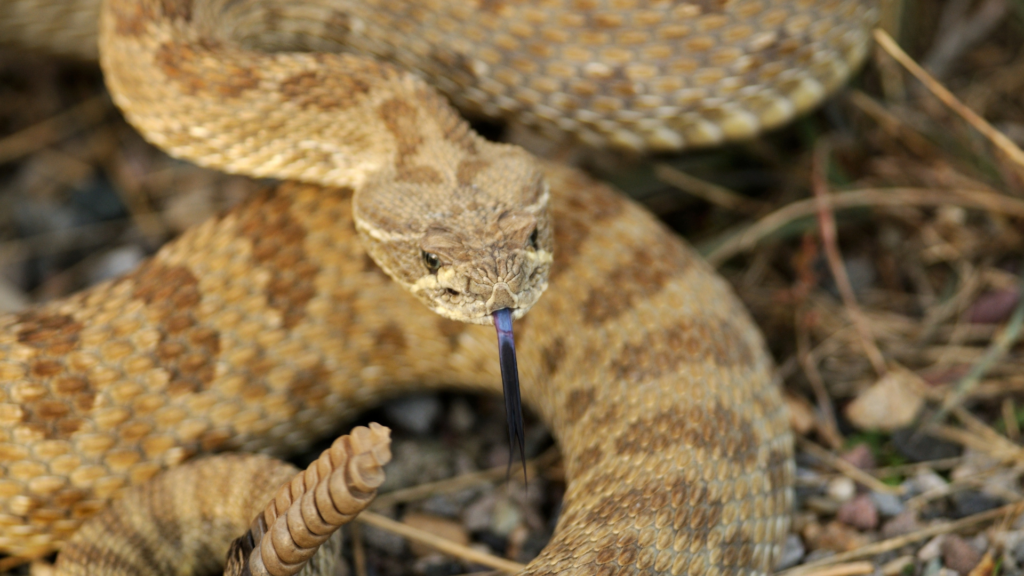
To start, let’s explore the super senses of a snake. ‘Chemoreception’ in a snake, is the biological process of detecting and analyzing chemical particles in the environment to smell, taste, and navigate their surroundings.2 Another super sense is called ‘infrared thermoreception’. “Snakes possess a unique sensory system for detecting infrared radiation, enabling them to generate a ‘thermal image’ of predators or prey.”3 According to an article published by the Smithsonian’s National Zoo & Conservation Biology Institute: “Snakes do not have an external ear, but they do have all the parts of the inner ear that we do. Their stapes—called a ‘columella’—is slightly different from ours in that it connects to the jawbone, enabling them to sense vibrations.” While they can only hear a portion of the sounds we hear, snakes can detect vibrations between 50 and 1,000 Hertz.4 “Many snakes also have a heat pit, which is one of the most sensitive sensory organs in any animal.4 It can pick up a change in temperature as little as 0.001 degrees Celsius!”4 The heat pit gives the snake a complete infrared picture of what is going on in its world—where prey is, what the hottest part of the prey is and where to strike.”4
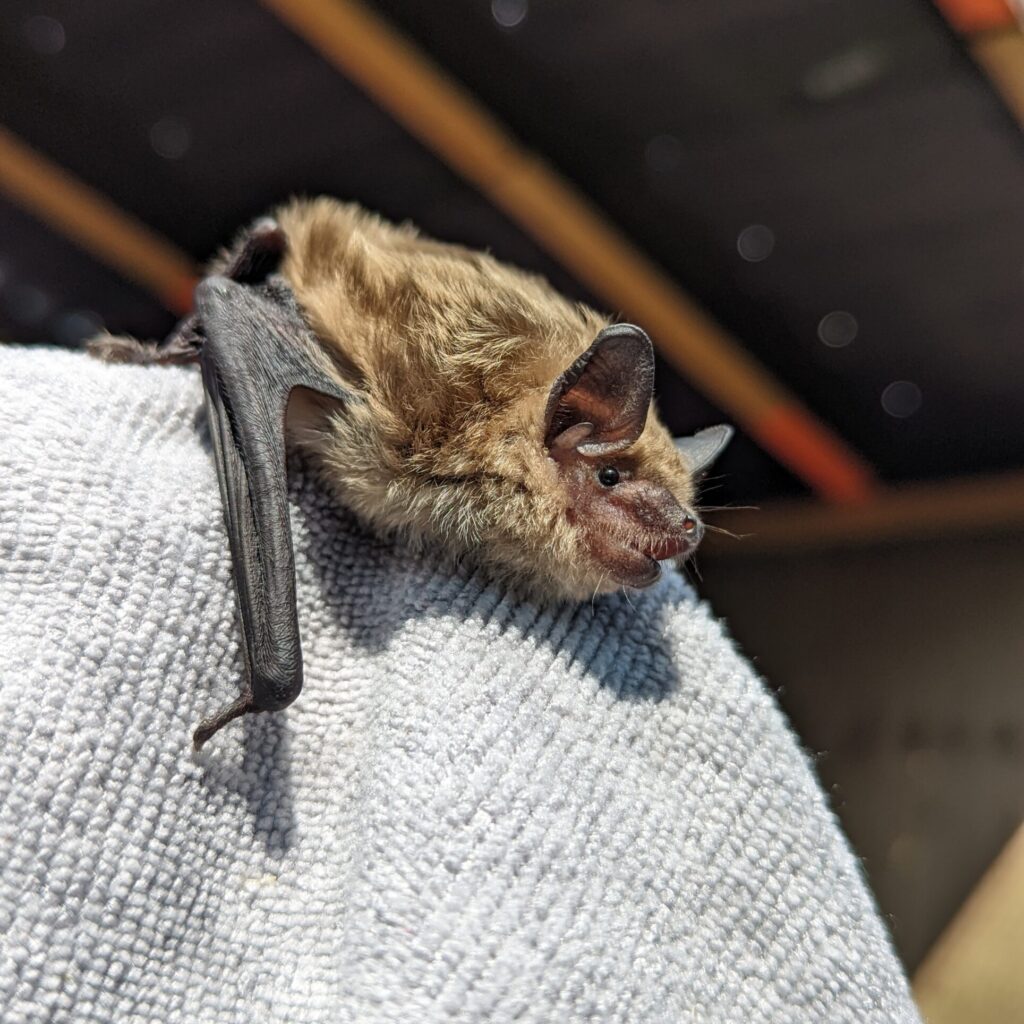
Much like a snake’s sensitivity to temperature, bats have similar abilities to help them detect prey and navigate through the dark. Vampire bats have a special trick called heat vision; however it is not actually vision, but touch.5 “Mammals, including humans, possess a type of nerve receptor known as TRPV1, which detects heat and is responsible for the burning sensation we experience when we touch something hot or eat something spicy. The regular version of this protein gets activated by temperatures above 43 degrees C, but vampire bats have a second version that is instead activated around 30 degrees C. This modified version helps vampire bats sense heat from blood vessels, improving their ability to hunt.”5 Bats also have a super sense called ‘echolocation’. Bats possess excellent hearing abilities using echolocation, which emits high-frequency sound waves and analyzes the returning echoes to navigate and locate prey in complete darkness. Some bats can detect prey smaller than a mosquito.6 As if heat vision and echolocation were not enough, bats have yet another super sense. “Like birds, they [bats] can navigate by sensing Earth’s magnetic field. The only other mammals known to do this are naked mole rats and Siberian hamsters.”7
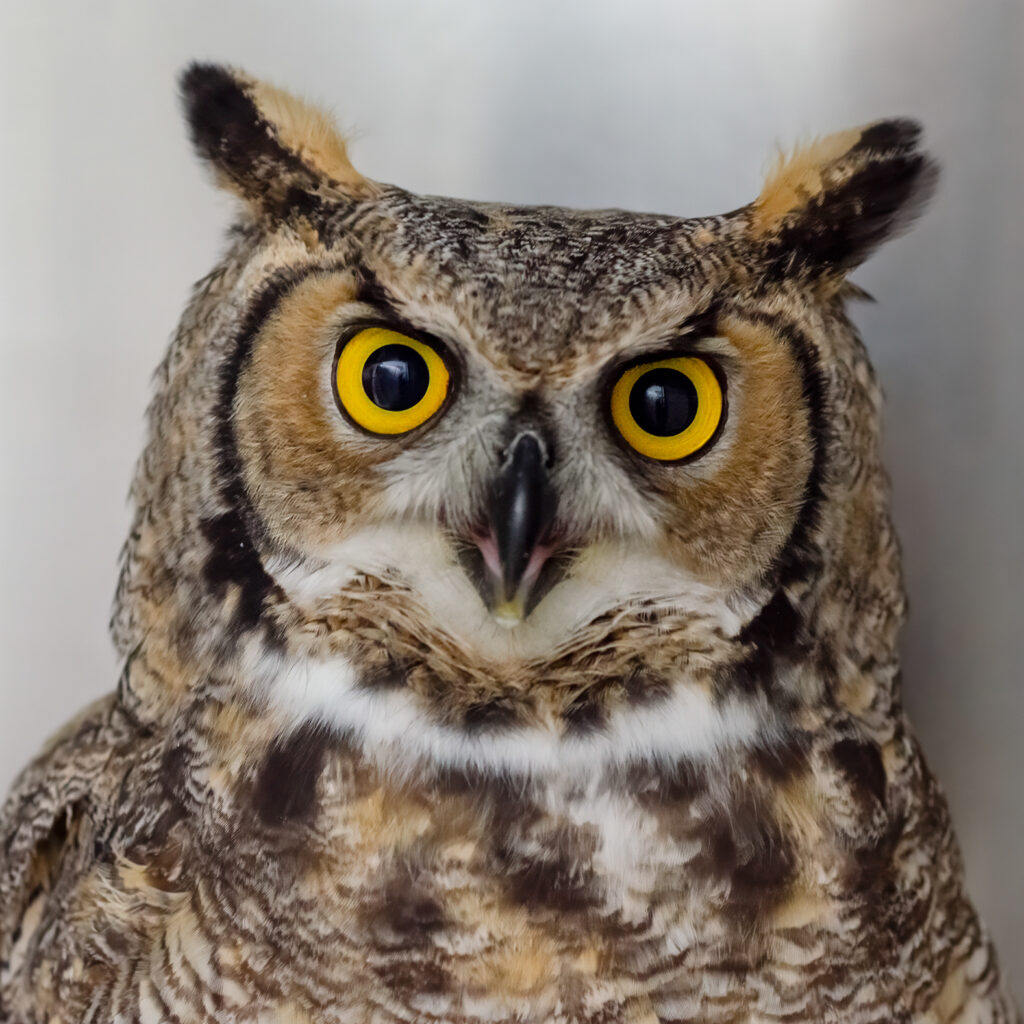
Our final stop on the super senses ‘Tour du Alberta’, is the owl. Similar to the bat, owls rely on their super senses to hunt in extreme or total darkness. Two main super senses of an owl include ‘Night Vision’ and ‘Directional Hearing’. An owl’s eye has something called a “Reflective Mirror Layer: A special layer behind the retina called the tapetum lucidum bounces light back through the light-sensitive cells; this makes their eyes up to 100 times more sensitive in low light than human eyes.”8 So, if an owl has impeccable night vision, can they also see in daylight? The answer is ‘Yes’. “Owl pupils can contract in bright light just like ours do. They can dilate and contract the pupil of each eye independently, giving them an amazing amount of control over just how much light hits the retina in each eye. In fact, some owl species are more active during the day than at night — and eye color can be a good indicator as to which type of owl you’re seeing.”8 A distinct characteristic of an owl is the circular or oval shape to their face, often referred to as their ‘Facial Disc’. Fun Fact: The owl’s face shape actually aids in their exceptional hearing abilities. “The stiff feathers surrounding an owl’s face act like a satellite dish, focusing and funneling sound directly into their ears. This allows them to pinpoint a mouse moving beneath a foot of snow without even seeing it.”9
When researching animal senses, it becomes clear that no two species are exactly the same. While it is important to note that not all animals have the 5 basic human senses, other animals have ‘super senses’ above and beyond typical capabilities. Also, some of these super senses you may not be able to detect with the naked eye. Though a snake doesn’t seem to visually have ears, their hearing is even stronger with their vibrational and thermo-senses. A bat who has little to no vision, can navigate and hunt prey sheerly from their hearing abilities. Lastly, who could have guessed, an owl’s face shape would help aid in their hunting and hearing abilities. It never ceases to amaze, seeing the vast differences and abilities of animal super species.
Citations
- “Super Senses in Animals Explained”, accessed September 2nd 2026, https://www.scribd.com/presentation/902013943/super-senses-of-animals
- “Sneaky Snake Facts”, accessed September 2nd 2026, https://biomedicalsciences.unimelb.edu.au/departments/department-of-biochemistry-and -pharmacology/engage/avru/blog/sneaky-snake-facts
- “Molecular Basis of Infrared Detection by Snakes”, accessed September 2nd 2026, https://pmc.ncbi.nlm.nih.gov/articles/PMC2855400/
- “Do Snakes Have Ears? And Other Sensational Serpent Questions”, accessed September 2nd 2026, https://nationalzoo.si.edu/animals/news/do-snakes-have-ears-and-other-sensational-ser pent-questions
-
“The Bat Pub: Touch the Sky”, accessed September 3rd 2026, https://www.batcon.org/touch-the-sky/
-
“Unlocking the Extraordinary: Super Senses of Animals and Their Sense Organs”, accessed September 3rd 2026, https://chrysalishigh.com/blog/student-corner/super-senses-of-animals-and-their-sense-o rgans/
-
“Bats have magnetic super-sense too”, accessed September 3rd 2026, https://www.newscientist.com/article/1885248-bats-have-magnetic-super-sense-too/
- “ ‘Owl’ Be Seeing You: Amazing Facts About Owl Eyes”, accessed September 3rd 2026, https://abcbirds.org/news/owl-be-seeing-you-amazing-facts-about-owl-eyes/
- “A Barn Owl’s amazing powers of hearing”, accessed September 3rd 2026, https://www.barnowltrust.org.uk/owl-facts-for-kids/barn-owl-hearing